

-
Case Study
-
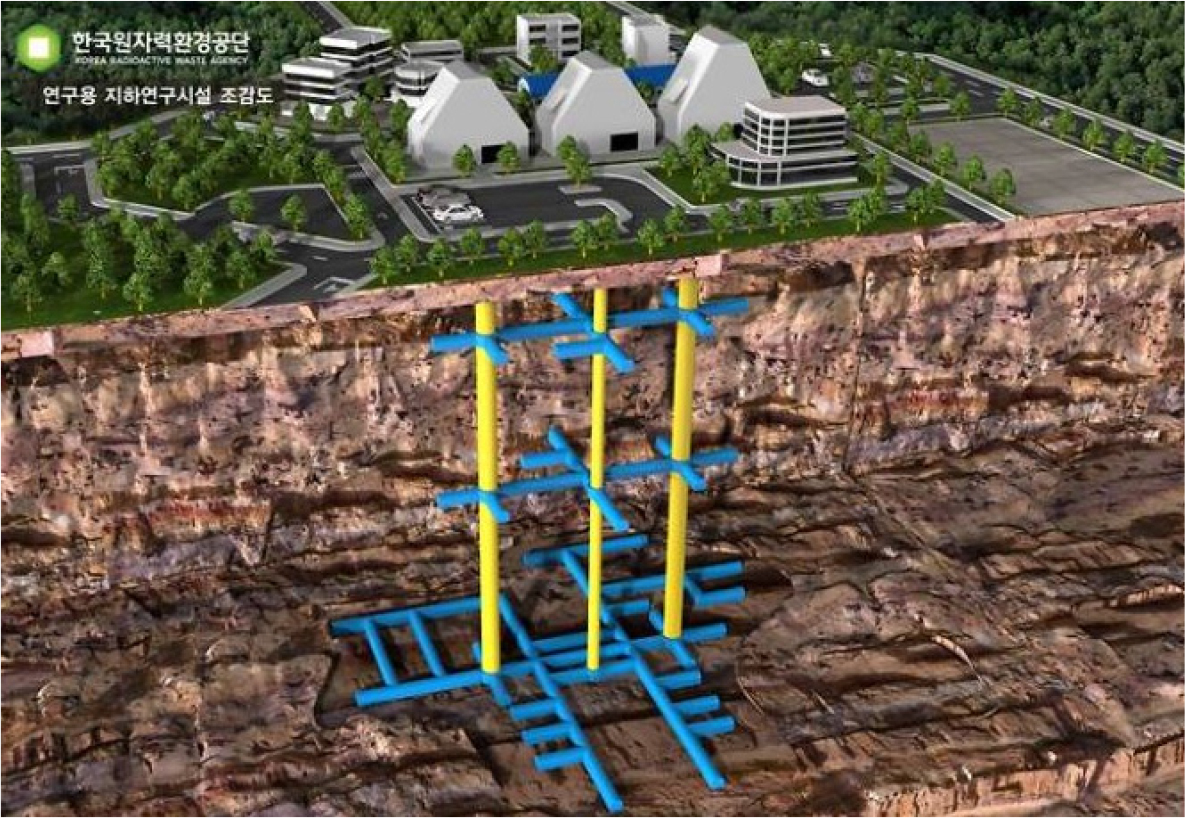
5D BIM을 활용한 태백 지하연구시설(Underground Research Laboratory)의 시공 시나리오 분석 및 시공계획 사례연구
A Case Study on Construction Scenario Analysis and Planning for the Taebaek Underground Research Laboratory using 5D BIM
-
박경규, 안성진, 김형목, 손영수, 안지현, 임경호, 박의섭, 김정인
Kyung-Kyu Park, Seong-Jin Ahn, Hyung-Mok Kim, Young Su Sohn, Ji Hyun An, Kyung-Ho Lim, Eui-Seob Park, Jung In Kim
- 태백 지하연구시설은 고준위방사성폐기물 심층처분기술을 실제 심부 암반환경에서 연구하기 위한 대규모 복합 지하시설로, 다수의 수직구와 심도별 수평터널이 입체적으로 연결되므로 진·출입시설의 구성과 굴착순서가 전체 …
The Taebaek Underground Research Laboratory is planned as a large-scale underground facility for validating deep geological disposal technologies, in which access configuration …
- 태백 지하연구시설은 고준위방사성폐기물 심층처분기술을 실제 심부 암반환경에서 연구하기 위한 대규모 복합 지하시설로, 다수의 수직구와 심도별 수평터널이 입체적으로 연결되므로 진·출입시설의 구성과 굴착순서가 전체 공사기간과 공사비에 연쇄적인 영향을 미친다. 본 연구에서는 공개된 자료를 바탕으로 태백 지하연구시설의 3차원 BIM 모델을 구축하고, BIM 객체에 작업분류체계, 공정 및 단위공사비 정보를 연계하여 5D BIM 기반의 시공계획 검토체계를 구성하였다. 진·출입용 수직구의 굴착순서와 경사 진입터널의 적용 여부를 달리한 세 가지 대안을 분석한 결과, 전체 공사기간은 각각 37.0개월, 34.5개월 및 43.0개월, 직접공사비는 대안 1과 대안 2가 각각 726.4억 원, 대안 3이 938.7억 원으로 산정되었다. 대안 2는 작업조별 굴착순서와 공정 간 선후행 관계를 조정하여 대안 1보다 공사기간을 2.5개월 단축하였으며, 대안 3은 접근성 측면의 장점에도 불구하고 장거리 경사 진입터널 굴착으로 인해 공사기간과 직접공사비가 증가하였다. 본 연구는 계획단계에서 시설물의 형상, 공정 및 비용을 통합적으로 비교할 수 있음을 보여주며, 구축된 모델은 향후 지질조사, 시공실적, 계측 및 유지관리 자료를 연계하기 위한 초기 기반으로 활용될 수 있다. 다만, 본 연구에서 제시한 공사기간 및 직접공사비는 일반적인 설계 및 시공 조건을 가정한 예측치로서, 실제 사업에서는 부지의 지질·지반 특성과 상세 설계사양 및 제반 시공여건에 따라 달라질 수 있다.
- COLLAPSE
The Taebaek Underground Research Laboratory is planned as a large-scale underground facility for validating deep geological disposal technologies, in which access configuration and excavation sequence significantly affect construction duration and cost. This study developed a three-dimensional BIM model using publicly available conceptual planning information and linked the BIM objects with a work breakdown structure, schedule activities, and unit-cost data. Three alternatives were analyzed by varying the shaft excavation sequence and the use of an inclined access tunnel. The estimated construction durations were 37.0, 34.5, and 43.0 months, while the direct construction costs were 72.64, 72.64, and 93.87 billion won, respectively. Alternative 2 reduced the duration by 2.5 months through schedule rearrangement, whereas Alternative 3 increased both duration and direct cost because of the long inclined rampway. The results demonstrate the applicability of 5D BIM to integrated geometry, schedule, and cost evaluation at the planning stage and provide an initial information base for future data integration. It should be noted that construction duration and direct construction cost presented in this study were estimated under general design and construction conditions, and these results may vary depending on site-specific geological and geotechnical environments, detail design specifications, and construction practices.
-
5D BIM을 활용한 태백 지하연구시설(Underground Research Laboratory)의 시공 시나리오 분석 및 시공계획 사례연구
-
Case Study
-
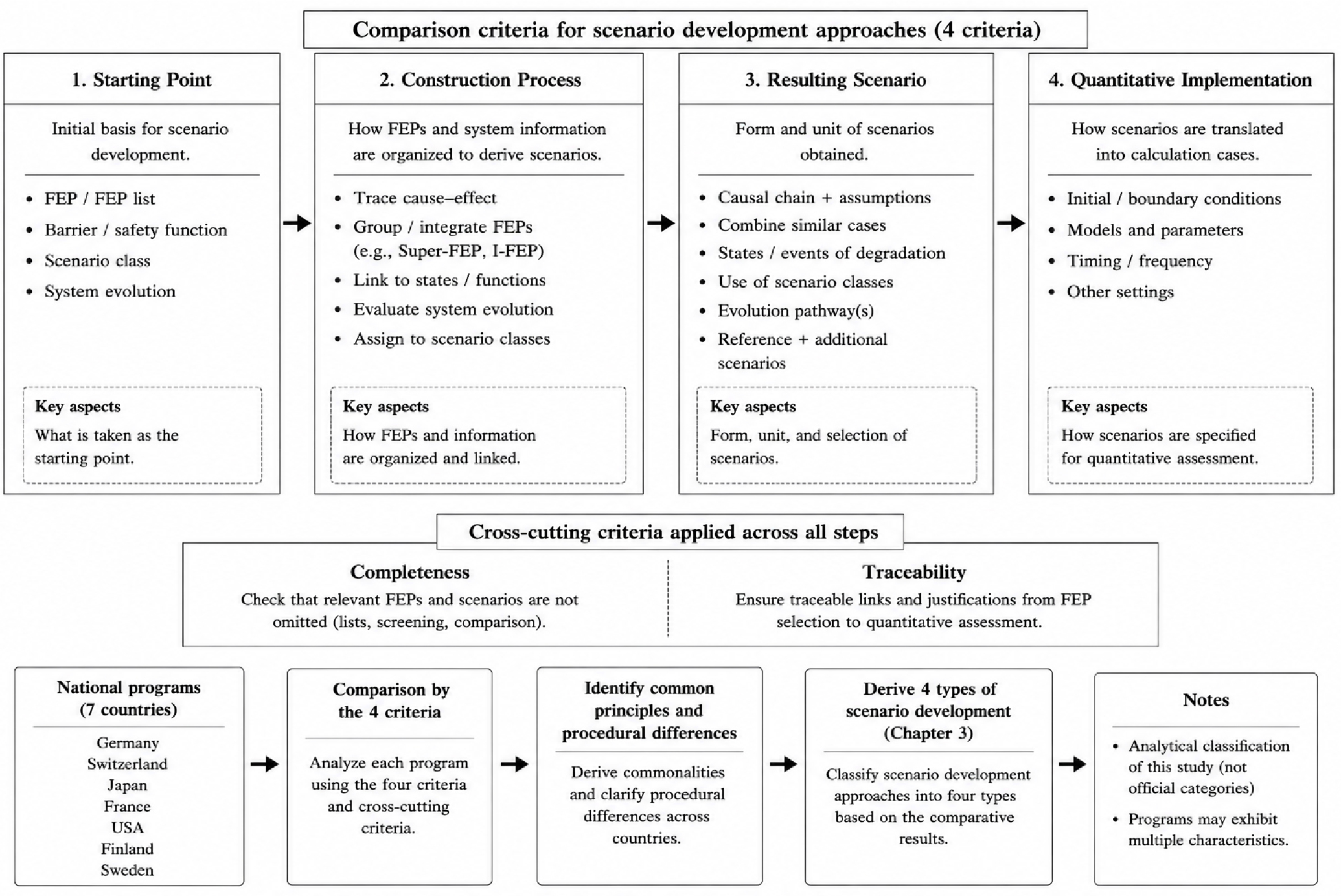
주요 심층처분 프로그램의 시나리오 구성방법 비교와 국내 적용을 위한 개념적 검토
Comparative Analysis of Scenario Construction Methods in Major Geological Disposal Programs and Conceptual Considerations for Application in Korea
-
홍승기, 오세욱, 채병곤, 박의섭
Seungki Hong, Sewook Oh, Byung-Gon Chae, Eui-Seob Park
- 고준위방사성폐기물 심층처분의 장기 안전성평가에서는 처분시스템의 미래 거동을 시나리오로 구성하여 정량평가하며, 특징·사건·과정(FEP)은 이 과정에서 다양하게 활용된다. 본 연구는 프랑스, 스위스, 독일, 일본, 핀란드, …
In long-term safety assessments for deep geological disposal of high-level radioactive waste, the future behavior of the disposal system is represented by …
- 고준위방사성폐기물 심층처분의 장기 안전성평가에서는 처분시스템의 미래 거동을 시나리오로 구성하여 정량평가하며, 특징·사건·과정(FEP)은 이 과정에서 다양하게 활용된다. 본 연구는 프랑스, 스위스, 독일, 일본, 핀란드, 스웨덴 및 미국의 심층처분 프로그램을 대상으로 시나리오 구성의 시작점, 도출과정, 도출 시나리오 및 정량평가 구현방식을 비교하였다. 반복적으로 나타나는 절차적 특징을 인과추적형, FEP 그룹화·통합형, 상위틀 선행형, 진화경로형의 네 유형으로 정리하였으며, 이는 각국의 공식 분류나 상호 배타적 구분이 아니다. FEP는 프로그램에 따라 인과관계 추적, 그룹화·통합, 진화분석 또는 누락 확인 등에 활용되었다. 국내에서는 부지 미확정 조건에서도 대표 지질환경과 FEP 목록으로 각 방법을 개념적으로 검토할 수 있으며, 지질·암반공학적 정보는 방법에 따라 FEP 인과관계, 상태변수, 안전기능 저하 또는 장기진화와 연계될 수 있다. 부지특정 및 자료 확보 단계에서는 시나리오와 계산조건을 구체화하고 근거를 추적 가능하게 문서화하는 것이 중요하며, 본 결과는 특정 방법의 국내 적합성을 의미하지 않는다.
- COLLAPSE
In long-term safety assessments for deep geological disposal of high-level radioactive waste, the future behavior of the disposal system is represented by scenarios and evaluated quantitatively, and Features, Events and Processes (FEPs) are used in various ways throughout this process. This study compares disposal programs in France, Switzerland, Germany, Japan, Finland, Sweden, and the United States in terms of the starting point, construction process, resulting scenarios, and implementation in quantitative assessment. Recurring procedural characteristics were organized into four types: causal-tracing, FEP grouping-and-integration, framework-first, and evolution-pathway; these are neither official nor mutually exclusive classifications used by the national programs. FEPs are used differently across programs for causal tracing, grouping or integration, evolution analysis, or completeness checking. Under current Korean conditions, where a disposal site has not yet been determined, each method can be conceptually examined using representative geological environments and FEP lists, and geological and rock engineering information can be linked, depending on the method, to FEP causal relationships, state variables, safety-function degradation, or long-term system evolution. As site-specific conditions and data are secured, scenarios and calculation conditions should be specified with traceable documentation of their rationale. This comparison does not identify a preferred method for Korea.
-
주요 심층처분 프로그램의 시나리오 구성방법 비교와 국내 적용을 위한 개념적 검토
-
Original Article
-
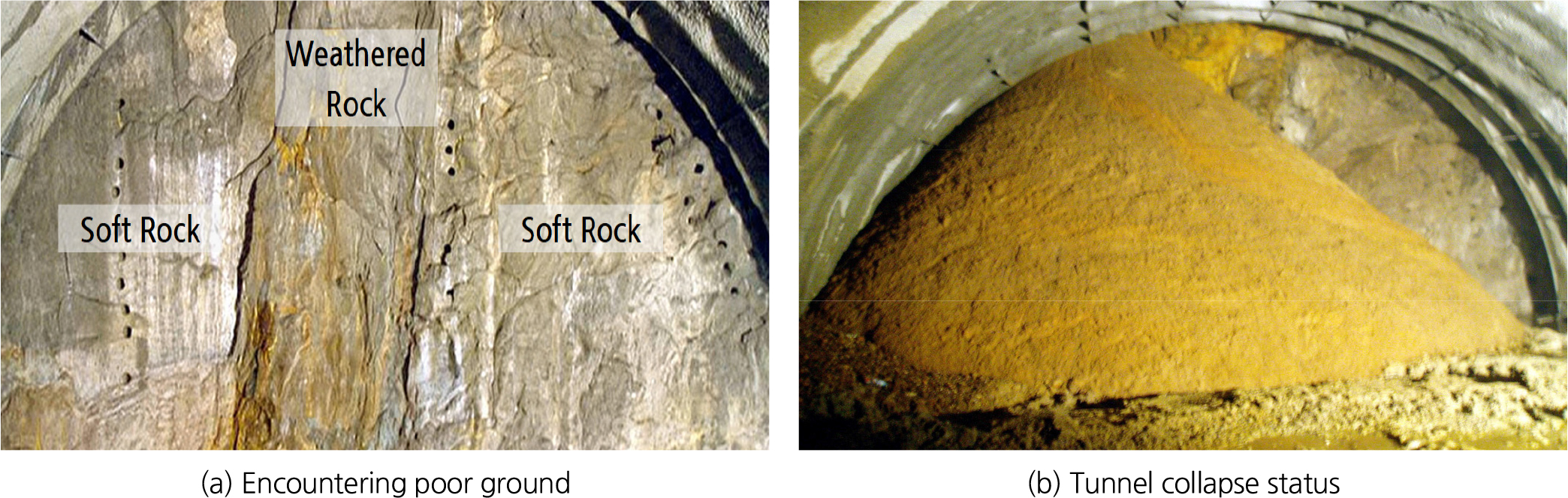
철도터널 굴착시 계측 이상변위 기반의 지보패턴별 정량적 붕괴징후 평가기준 개발
Quantitative Collapse Assessment of Railway Tunnel Support Patterns Based on Monitored Anomalous Displacements
-
한영아, 조국환
Young-a Han, Guk-Hwan Cho
- 최근 다양한 터널 붕괴사고가 지속적으로 발생되고 있어 터널 안정성 확보에 대한 관심이 증가하고 있다. 터널은 지반의 불확실성을 내포하고 있어 설계 지보패턴 보다 …
Recently, tunnel collapse accidents have been occurring, raising concerns about tunnel safety. Because tunnels involve ground uncertainty, if they are under-reinforced in …
- 최근 다양한 터널 붕괴사고가 지속적으로 발생되고 있어 터널 안정성 확보에 대한 관심이 증가하고 있다. 터널은 지반의 불확실성을 내포하고 있어 설계 지보패턴 보다 현장 지반조건이 불량한 경우 이상변위를 동반한 터널 붕괴가 발생할 수 있다. 시공중 터널 안정성을 확인하기 위해 일반적인 계측 관리기준이 제시되어 있으나, 터널 붕괴징후에 대한 판단기준이 없어 추가보강 및 긴급대피 등 붕괴대응 조치에 대한 판단이 어려운 실정이다. 본 연구에서는 터널 붕괴전 발생하는 이상변위를 기준으로 하는 터널 붕괴징후 평가기준을 개발하고자 하였다. 이를 위해 터널단면 및 지반조건 등의 매개변수를 고려한 지반안정성 검토를 수행하여 지반의 불확실성에 따른 암반강도 하향시 터널에 발생하는 변위와 지보재 응력을 평가하였다. 검토 결과, 일부 검토조건에서 지반의 불량화에 따라 지보재 응력이 허용기준을 초과하여 터널에 이상변위가 발생한 것으로 나타났다. 터널에 발생한 이상변위를 토대로 지보패턴에 따른 정량적 터널 붕괴징후 평가기준을 개발하였다. 터널 붕괴징후 평가기준을 통해 터널 붕괴징후를 사전에 파악하여 붕괴대응 조치를 보다 효과적으로 수행할 수 있게 되기를 기대해 본다.
- COLLAPSE
Recently, tunnel collapse accidents have been occurring, raising concerns about tunnel safety. Because tunnels involve ground uncertainty, if they are under-reinforced in poor ground conditions, tunnel collapse accompanied by abnormal displacement may occur. General measurement management standards have been established to verify tunnel stability during construction. However, due to the lack of evaluation standard for signs of tunnel collapse, it is currently difficult to implement collapse response measures, such as additional reinforcement and emergency evacuation. This study developed a tunnel collapse evaluation standard based on abnormal displacement occurring prior to tunnel collapse. Numerical analysis was performed considering parameters such as tunnel cross-section and ground conditions. tunnel displacement and support system were evaluated when the rock strength was downgraded due to ground uncertainty. In some review conditions, it was found that abnormal displacement occurred as the stress of the support system exceeded the allowable standard due to under-reinforcement caused by ground deterioration. Based on abnormal displacements occurring in the tunnel, step-by-step tunnel collapse evaluation standard according to tunnel support patterns were developed. Through the proposed tunnel collapse evaluation standard, it will be possible to identify signs of tunnel collapse in advance and ensure tunnel stability through collapse response measures.
-
철도터널 굴착시 계측 이상변위 기반의 지보패턴별 정량적 붕괴징후 평가기준 개발
-
Original Article
-
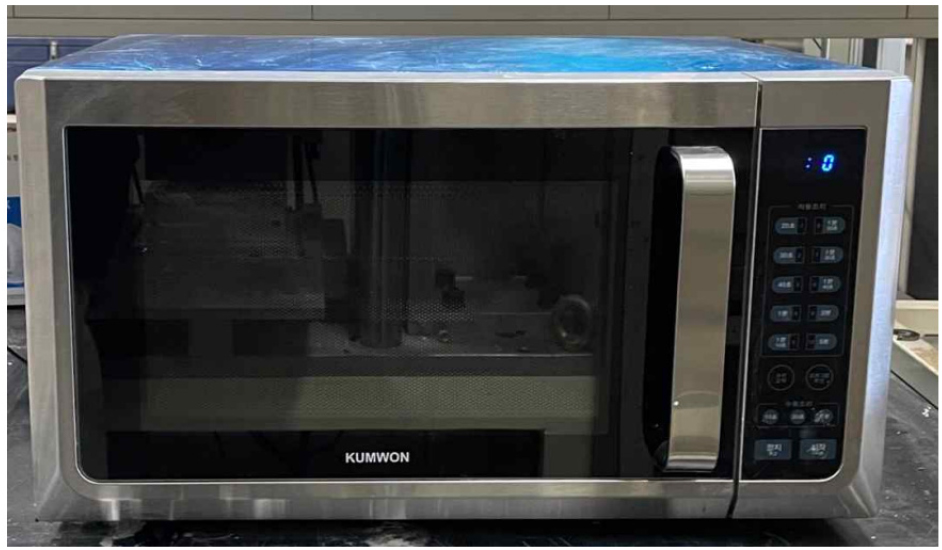
마이크로웨이브 조사에 따른 포천화강암의 역학적 물성 변화 및 픽커터 절삭 성능 평가
Effect of Microwave Irradiation on Mechanical Properties and Pick Cutting Performance of Pocheon Granite
-
박민성, 주민석, 기경민, 김현식, 정호영
Minseong Park, Minseok Ju, Gyeong-Min Ki, Hyunsik Kim, Hoyoung Jeong
- 기계식 굴착은 발파 굴착에 비해 진동, 소음 및 여굴을 저감할 수 있으며 연속 굴착이 가능하다는 장점을 가진다. 화강암과 같은 고강도 경암 조건에서는 …
Mechanical excavation is widely used in hard rock excavation because it enables continuous excavation while reducing vibration, noise, and overbreak compared with …
- 기계식 굴착은 발파 굴착에 비해 진동, 소음 및 여굴을 저감할 수 있으며 연속 굴착이 가능하다는 장점을 가진다. 화강암과 같은 고강도 경암 조건에서는 높은 절삭하중과 커터 마모로 인해 굴착 효율이 저하되는 문제가 발생한다. 이에 따라 암석 내부에 열적 손상을 유도하여 절삭저항을 감소시키는 마이크로웨이브 전처리 기술이 경암 굴착의 유망한 보조 공법으로 주목받고 있다. 마이크로웨이브 조사는 암석 내부의 국부적 온도 상승과 광물 간 열팽창 차이에 의해 미세균열을 발생시킬 수 있으며, 이는 암석의 역학적 물성 저하와 절삭 효율 향상으로 이어질 수 있다. 본 연구에서는 국내 포천 화강암을 대상으로 마이크로웨이브 조사에 따른 역학적 물성 변화와 절삭성능 변화를 정량적으로 평가하였다. 이를 위해 탄성파 속도, 일축압축강도 및 간접인장강도를 측정하였으며, 픽 커터를 이용한 선형절삭시험을 통해 절삭력, 수직력, 비에너지 및 파쇄물 입도분포의 변화를 분석하였다. 시험 결과, 마이크로웨이브 조사에 따라 탄성파 속도는 P파는 23.2%, S파는 16.1% 감소하였고, 역학적 강도의 경우 간접인장강도는 35,2%, 일축압축강도 25.5% 감소하였으며, 절삭력과 비에너지는 감소하고 세립 파쇄물의 비율이 증가하였다. 이러한 결과는 마이크로웨이브 전처리가 경암 굴착 시 절삭저항을 감소시키고 절삭효율을 향상시킬 수 있는 효과적인 보조 공법이 될 수 있음을 시사한다.
- COLLAPSE
Mechanical excavation is widely used in hard rock excavation because it enables continuous excavation while reducing vibration, noise, and overbreak compared with conventional drilling and blasting. However, in high-strength rocks such as granite, excavation efficiency is often reduced because of high cutting resistance and severe cutter wear. Accordingly, microwave pretreatment has attracted considerable attention as a promising technique for weakening hard rock prior to mechanical excavation. Microwave irradiation induces localized heating and differential thermal expansion among constituent minerals, generating microcracks that degrade the mechanical properties of the rock and improve its cuttability. This study quantitatively investigated the influence of microwave irradiation on the mechanical properties and cutting performance of Pocheon granite. The experimental results showed that microwave irradiation reduced the elastic wave velocities by 23.2% for P-waves and 16.1% for S-waves. The mechanical strength also decreased, with reductions of 35.2% in Brazilian tensile strength and 25.5% in uniaxial compressive strength. In addition, the cutting force and specific energy decreased, while the proportion of fine rock fragments increased. Microwave irradiation significantly reduced the mechanical strength, cutting force, and specific energy while promoting finer fragmentation, demonstrating its potential as a pretreatment technique for improving the efficiency of hard-rock mechanical excavation.
-
마이크로웨이브 조사에 따른 포천화강암의 역학적 물성 변화 및 픽커터 절삭 성능 평가
-
Original Article
-
거칠기와 간극의 상관거리에 따른 단일 암석 절리의 수리 유동 특성
Characterization of Fluid Flow through a Single Rock Joint according to the Roughness and Aperture Correlation
-
최승범, 김진섭
Seungbeom Choi, Jin-Seop Kim
- 결정질 암반에서 지하수 유동은 주로 절리를 통해 발생하므로, 단일 절리를 통한 수리 유동의 정량적 특성화는 여러 암반 공학 문제에서 중요하다. 본 연구에서는 …
Groundwater flow in crystalline rock masses occurs mainly through joints, making the hydraulic characterization of single joint important for various rock mechanics …
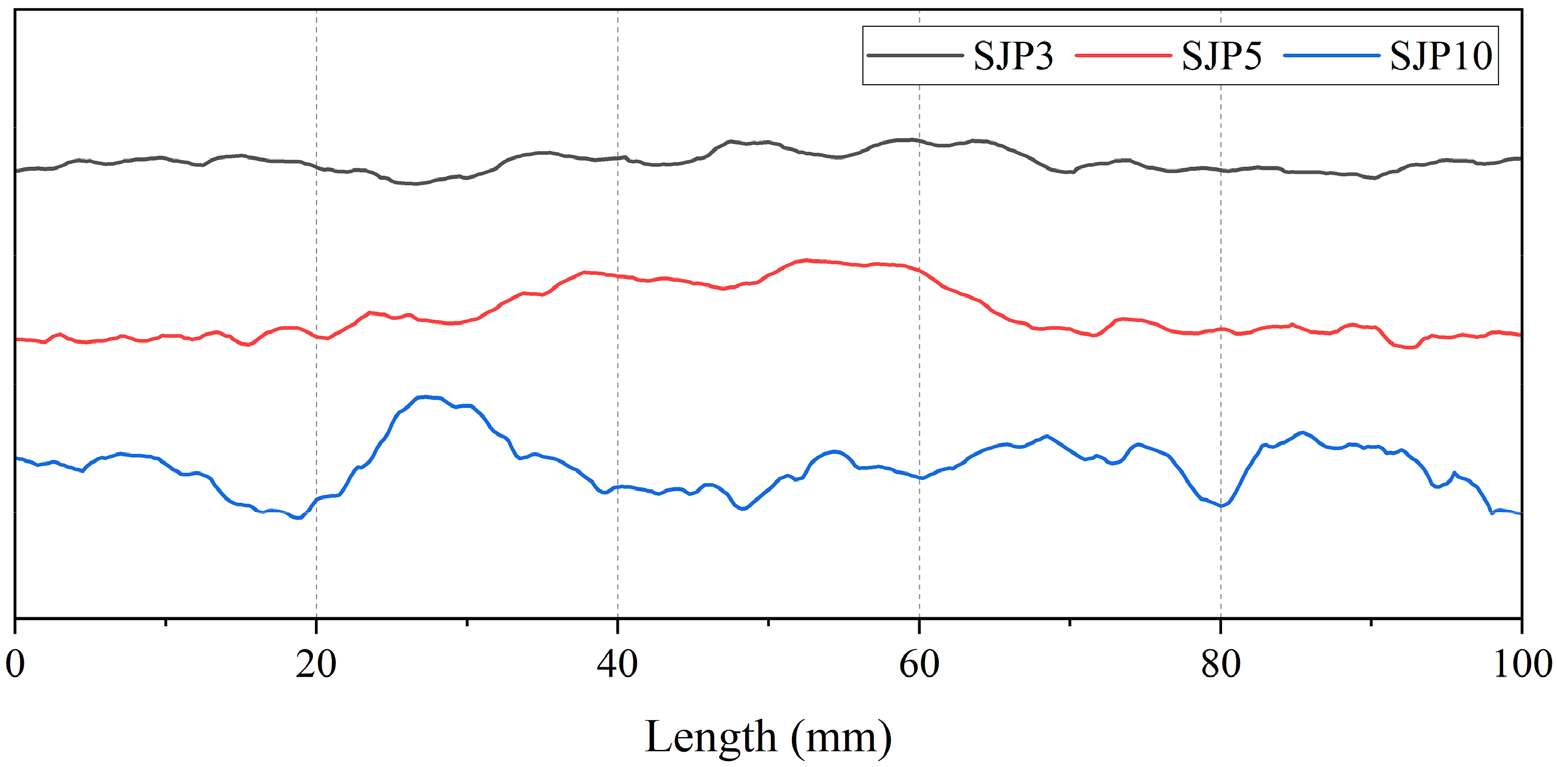
- 결정질 암반에서 지하수 유동은 주로 절리를 통해 발생하므로, 단일 절리를 통한 수리 유동의 정량적 특성화는 여러 암반 공학 문제에서 중요하다. 본 연구에서는 절리 거칠기와 간극의 공간 상관성이 단일 암석 절리를 통한 선형 및 비선형 유동에 미치는 영향을 수치해석적으로 분석하였다. 표준 JRC 프로파일을 이용하여 2차원 절리 모델을 구성하고, 동일한 평균과 분포를 갖지만 상관거리가 서로 다른 간극 공간을 생성하였다. 이후 Navier-Stokes 방정식을 이용하여 정상상태 비압축성 유체에 대한 수리 해석을 수행하였고, Forchheimer 및 Izbash 방정식으로 결과를 분석하였다. 해석 결과, 짧은 간극 상관거리는 동일 평균 간극 조건에서도 유량을 감소시키고 비선형 유동 관련 계수를 증가시켰다. 이는 국부적인 간극 변동을 반복하면서 관성 손실과 와류 형성이 강화되었기 때문으로 판단되었다. 또한 이러한 영향은 거칠기가 큰 프로파일에서 더욱 뚜렷하게 관찰되었다. 본 연구 결과로부터 절리의 비선형 수리 유동 해석을 위해 거칠기와 간극 공간 특성을 별도로 정량화할 필요가 있음을 확인하였다.
- COLLAPSE
Groundwater flow in crystalline rock masses occurs mainly through joints, making the hydraulic characterization of single joint important for various rock mechanics applications. This study numerically investigated the effects of joint roughness and aperture spatial correlation on linear and nonlinear flow through a single rock joint. Two-dimensional numerical models were constructed using digitized standard JRC profiles, and aperture fields with identical mean and distribution but different correlation lengths were generated. Steady incompressible flow simulations were performed using the Navier-Stokes equations, and the results were analyzed with the Forchheimer and Izbash equations. The results showed that shorter aperture correlation lengths reduced discharge and increased nonlinear flow coefficients under the same mean aperture condition. This is attributed to frequent local aperture variations, which strengthen inertial loss and eddy formation. In addition, the effect was more pronounced for rougher profiles. These findings indicate that both joint roughness and aperture space characteristics should be separately quantified to interpret nonlinear flow through rock joints.
-
거칠기와 간극의 상관거리에 따른 단일 암석 절리의 수리 유동 특성
-
Original Article
-
화강암 시추코어의 RGB-CIELAB 색상값 분포 분석과 딥러닝 기반 풍화등급 예측 성능 비교
Analysis of RGB-CIELAB Color Distributions of Granite Cores and Comparison of Deep Learning-Based Weathering-Grade Prediction Performance
-
이준엽, 정호영
Jun-Yeop Lee, Hoyoung Jeong
- 본 연구에서는 화강암 시추코어 이미지의 RGB, HSV 및 CIELAB 색상분포를 정량화하고, 분위수 기반 색상특징을 이용한 SVM과 ResNet-18 기반 딥러닝 모델의 풍화등급 분류성능을 …
This study quantified the RGB, HSV, and CIELAB color distributions of granite drill-core images and compared the weathering-grade classification performance of support …
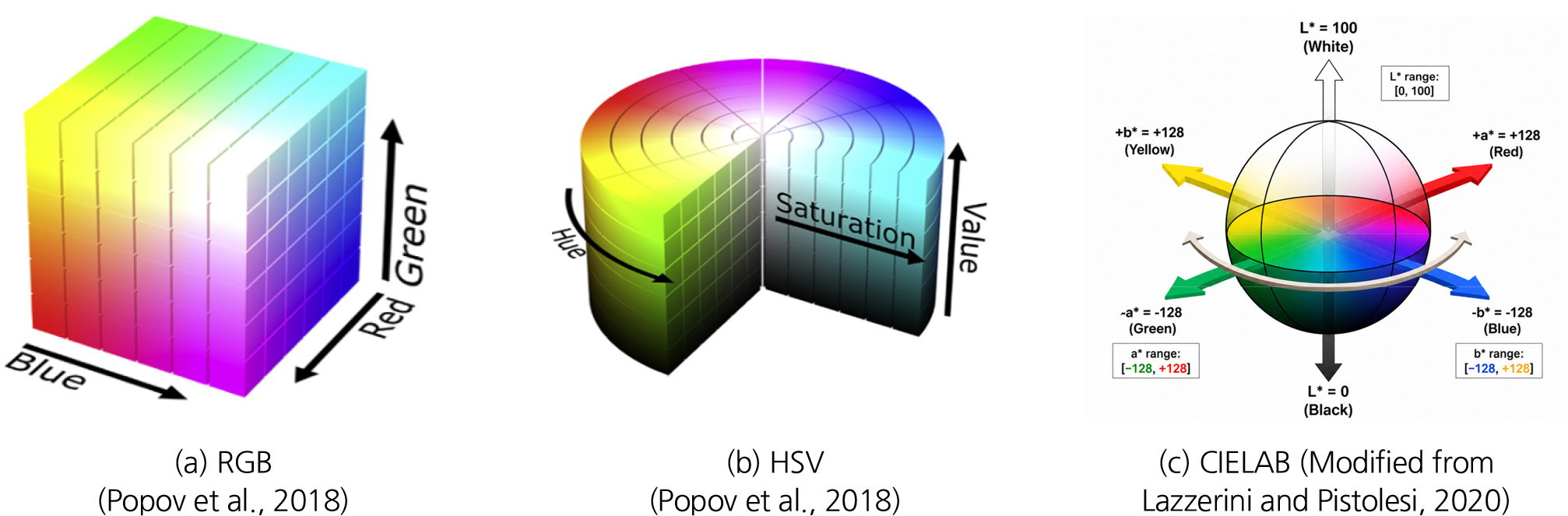
- 본 연구에서는 화강암 시추코어 이미지의 RGB, HSV 및 CIELAB 색상분포를 정량화하고, 분위수 기반 색상특징을 이용한 SVM과 ResNet-18 기반 딥러닝 모델의 풍화등급 분류성능을 비교하였다. 색상분석에는 건조·습윤 상태와 세 가지 조도조건에서 촬영된 대규모 이미지 자료를 사용하였으며, 촬영조건과 풍화등급에 따른 색상특성을 기술통계적으로 분석하였다. 분류실험에는 2,297개 물리 코어에서 획득한 8,057장의 이미지를 사용하였고, 동일 물리 코어에서 생성된 이미지가 서로 다른 자료군에 포함되지 않도록 물리 코어 단위로 학습, 검증 및 시험자료를 그룹 분할하였다. 분류모델은 색상특징 기반 SVM, RGB 타일을 입력으로 사용하는 ResNet-18 기준모델(R1), 그리고 R1의 코어 단위 예측확률과 색상특징 SVM의 예측확률을 결합한 융합모델(R2)로 구성하였다. 결합계수는 검증자료만을 이용하여 결정하였으며, 시험자료는 최종 성능평가에 1회만 사용하였다. 시험 결과, SVM 모델보다 딥러닝 모델의 분류성능이 높게 나타났으며, CIELAB 특징을 포함한 SVM과 RGB 이미지 기반 모델을 결합한 R2가 74.64%의 정확도로 가장 우수한 성능을 보였다. 이러한 결과는 CIELAB 기반 색상분포 특징이 RGB 이미지 기반 모델의 예측정보를 부분적으로 보완할 가능성을 보여준다. 다만, 제안 방법의 일반화 가능성과 현장 적용성을 확인하기 위해서는 독립된 현장자료를 이용한 추가 검증이 필요하다.
- COLLAPSE
This study quantified the RGB, HSV, and CIELAB color distributions of granite drill-core images and compared the weathering-grade classification performance of support vector machines (SVMs) using quantile-based color features with that of ResNet-18-based deep-learning models. A large image dataset acquired under dry and wet conditions and three illumination levels was used for the color analysis, and the color characteristics associated with imaging conditions and weathering grades were examined using descriptive statistics. The classification experiments used 8,057 images obtained from 2,297 physical cores. The data were group-split into training, validation, and test sets at the physical-core level to ensure that images derived from the same core were not assigned to different subsets. The classification framework consisted of color-feature-based SVMs, a baseline ResNet-18 model using RGB tiles as input (R1), and a fusion model combining the core-level prediction probabilities of R1 with those of the color-feature-based SVM (R2). The fusion coefficient was determined using the validation set only. The test set was not used for model, checkpoint, or fusion-coefficient selection and was reserved for final prediction and a prespecified sensitivity analysis.The results showed that the deep-learning models outperformed the SVM models, with R2, which combined the RGB image model with an SVM incorporating CIELAB features, achieving the highest accuracy of 74.64%. These findings suggest that CIELAB-based color-distribution features may partially complement the predictive information learned by the RGB image model. However, further validation using independent field datasets is required to assess the generalizability and practical applicability of the proposed method.
-
화강암 시추코어의 RGB-CIELAB 색상값 분포 분석과 딥러닝 기반 풍화등급 예측 성능 비교
-
Original Article
-
액체수소 지하저장 적용을 고려한 화강암의 저온 열변형 및 음향방출 특성 평가
Evaluation of Low-Temperature Thermal Strain and Acoustic Emission Characteristics of Granite for Underground Liquid Hydrogen Storage Applications
-
이종원, 최준형, 정용복, 박찬, 김명선, 김민준
Jong-Won Lee, Junhyung Choi, Yong-Bok Jung, Chan Park, Myungsun Kim, Min-Jum Kim
- 본 연구에서는 액체수소 지하저장 적용을 고려하여 저온 조건에서 황등화강암의 열변형 및 음향방출(Acoustic Emission, AE) 특성을 평가하였다. 화강암 시편을 상온에서 -63°C까지 단계적으로 냉각하면서 …
This study investigated the low-temperature thermal strain and acoustic emission (AE) characteristics of Hwangdeung granite for underground liquid hydrogen storage applications. Granite …
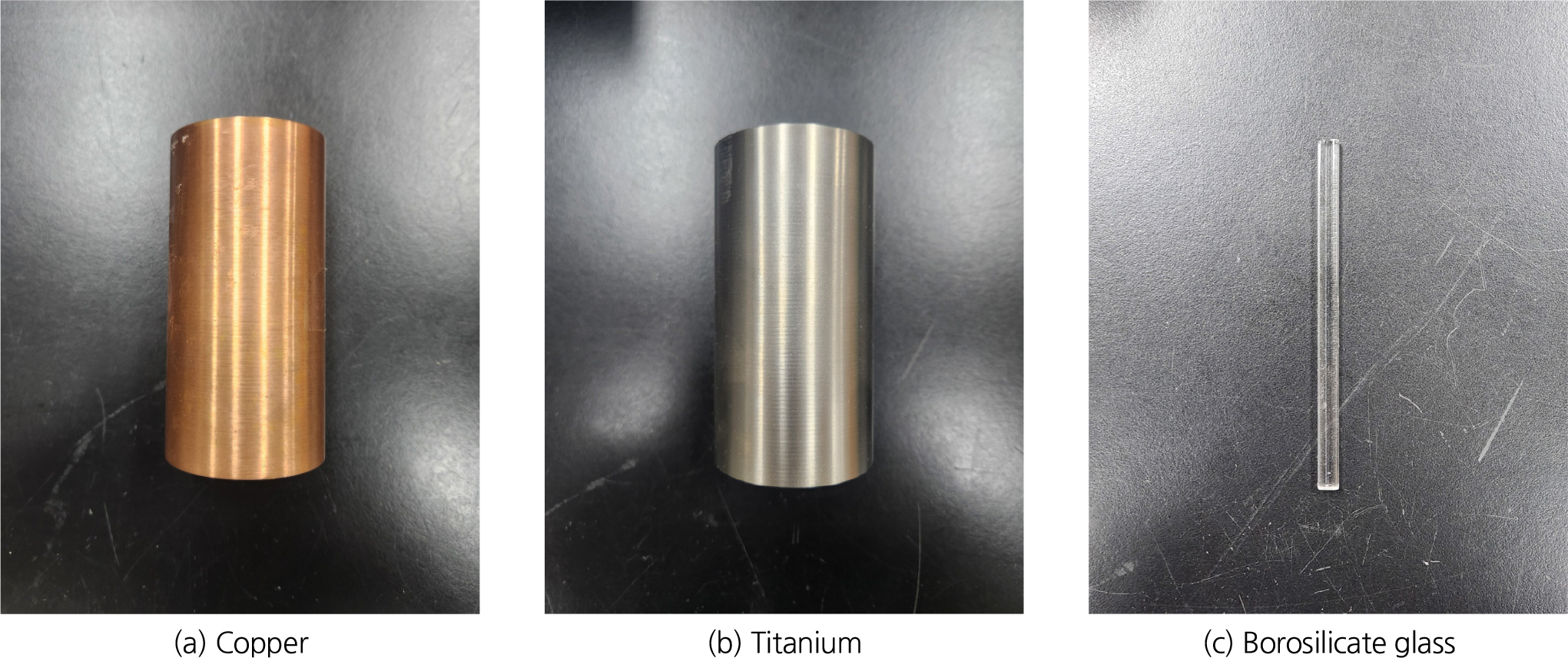
- 본 연구에서는 액체수소 지하저장 적용을 고려하여 저온 조건에서 황등화강암의 열변형 및 음향방출(Acoustic Emission, AE) 특성을 평가하였다. 화강암 시편을 상온에서 -63°C까지 단계적으로 냉각하면서 열변형률과 AE 활동을 측정하였다. 변형률게이지와 계측 시스템의 온도 의존적 영향을 보정하기 위해 구리, 붕규산 유리의 NIST 기준자료 및 티타늄 합금의 TPRC 기준자료와 비교하였으며, 구리에서 도출한 보정곡선을 화강암 시편의 측정값에 적용하였다. 보정 전 화강암 시편의 측정 열변형률은 약 -30°C에서 최대값을 나타낸 후 감소하였다. 반면 보정 후 열변형률은 온도가 낮아짐에 따라 거의 선형적으로 감소하여 -63°C에서 약 -200 με의 열수축을 나타냈다. 화강암 시편의 AE 활동은 약 -20°C 이하에서 증가하기 시작하여 -50~-30°C 구간에 집중되었으며, -40°C 부근에서 AE 신호 발생 비율이 가장 높았다. 이러한 결과는 화강암의 거시적 열수축이 온도에 따라 연속적으로 발생하더라도 미세균열과 관련된 AE 활동은 특정 온도 구간에 집중될 수 있음을 보여준다. 본 연구의 결과는 액체수소 지하저장 적용을 고려한 저온 환경에서 암반의 열변형 및 AE 특성을 평가하기 위한 실험적 기초자료로 활용될 수 있다.
- COLLAPSE
This study investigated the low-temperature thermal strain and acoustic emission (AE) characteristics of Hwangdeung granite for underground liquid hydrogen storage applications. Granite specimens were cooled stepwise from room temperature to -63°C while their thermal strain and AE activity were monitored. To correct the temperature-dependent effects of the strain gauges and measurement system, the measured strains of copper, borosilicate glass, and titanium alloy were compared with reference data from the National Institute of Standards and Technology (NIST) and the Thermophysical Research Center (TPRC). The calibration curve derived from the copper specimen was then applied to the granite measurements. Before correction, the apparent strain of the granite specimens reached a maximum near -30°C and then decreased. After correction, the thermal strain decreased almost linearly with temperature, reaching approximately -200 με at -63°C. AE activity increased below approximately -20°C and was concentrated between -30 and -50°C, with the highest proportion of AE hits near -40 °C. These results show that AE activity associated with microcracking can be concentrated within a specific temperature range despite continuous macroscopic thermal contraction. The findings provide fundamental experimental data for evaluating the thermal strain and AE characteristics of rock under low-temperature conditions relevant to underground liquid hydrogen storage.
-
액체수소 지하저장 적용을 고려한 화강암의 저온 열변형 및 음향방출 특성 평가
-
Original Article
-
초기재령 초속경 시멘트 모르타르의 동적증가계수 평가 및 재령-변형률 속도 의존 경험모델 제안
Evaluation of the Dynamic Increase Factor of Rapid-Hardening Cement Mortar at Early Ages and Proposal of an Age-Strain Rate Dependent Empirical Model
-
김경규, 오세욱, 최준형, 최병희, 김명선, 조상호
Gyeonggyu Kim, Sewook Oh, Junhyung Choi, Byunghee Choi, Myungsun Kim, Sangho Cho
- 본 연구에서는 초기재령 초속경 시멘트 모르타르의 동적 압축거동을 평가하기 위해 재령 1, 3, 7 및 14일에서 정적 압축시험과 스플릿 홉킨슨 압력봉(SHPB) 동적 …
This study evaluated the dynamic compressive behavior of early-age rapid-hardening cement mortar through static compression and split Hopkinson pressure bar (SHPB) tests …
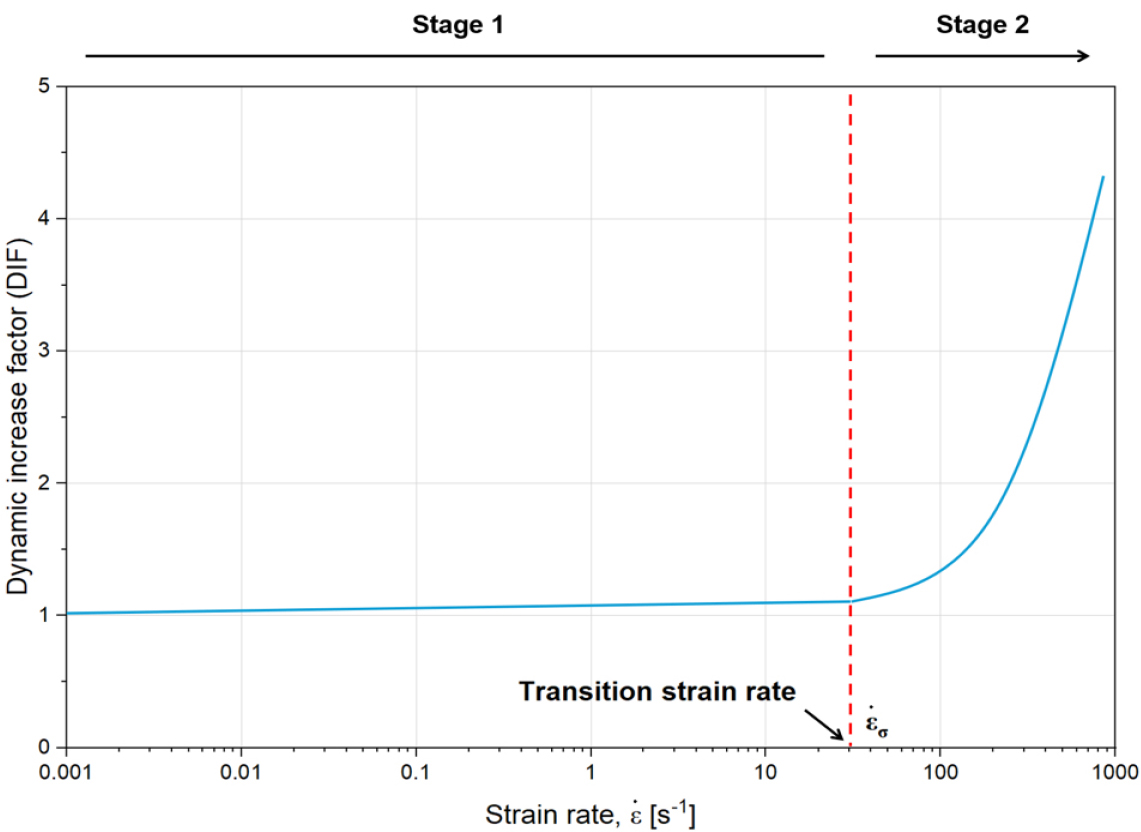
- 본 연구에서는 초기재령 초속경 시멘트 모르타르의 동적 압축거동을 평가하기 위해 재령 1, 3, 7 및 14일에서 정적 압축시험과 스플릿 홉킨슨 압력봉(SHPB) 동적 압축시험을 수행하였다. 실험 결과, 모든 재령에서 변형률속도가 증가함에 따라 동적 압축강도와 동적증가계수(DIF)가 전반적으로 증가하였다. DIF의 변형률속도 민감도는 재령 3일에서 가장 크게 나타난 후 7일과 14일에서 감소하는 비단조적 경향을 보였다. 초기재령 초속경 시멘트 기반 재료를 대상으로 한 기존 연구와 비교한 결과, 본 연구의 DIF는 중첩되는 시험범위와 회귀모델 비교에서 전반적으로 유사한 수준과 증가 경향을 나타냈다. 이를 바탕으로 재령과 변형률속도의 영향을 함께 고려하는 통합 DIF 모델을 제안하였으며, 제안모델은 높은 적합도를 나타냈다.
- COLLAPSE
This study evaluated the dynamic compressive behavior of early-age rapid-hardening cement mortar through static compression and split Hopkinson pressure bar (SHPB) tests at curing ages of 1, 3, 7, and 14 days. The dynamic compressive strength and dynamic increase factor (DIF) generally increased with strain rate at all curing ages. The strain-rate sensitivity of the DIF exhibited a non-monotonic trend, reaching its maximum at 3 days and subsequently decreasing at 7 and 14 days. Comparison with previous studies on early-age rapid-hardening cement-based materials showed generally consistent DIF levels and increasing trends within the overlapping test ranges and regression-model comparisons. Based on these results, a unified DIF model incorporating the effects of curing age and strain rate was proposed. The proposed model showed a good fit to the experimental data.
-
초기재령 초속경 시멘트 모르타르의 동적증가계수 평가 및 재령-변형률 속도 의존 경험모델 제안

 Tunnel and Underground Space








 Korean Society for Rock Mechanics and Rock Engineering
한국암반공학회
Editorial Office of the Journal of Korean Society for Rock Mechanics and Rock EngineeringRoom 709, The Korea Science and Technology Center The first building, 22, Teheran-ro 7-gil, Gangnam-gu, Seoul, 06130, Rep. of KOREA
Tel: +82-2-558-1896 / Fax: +82-2-558-1897 / E-mail: webmster@ksrm.or.kr Copyright© Korean Society for Rock Mechanics and Rock Engineering. Powered by APUB
Tel: +82-2-558-1896 / Fax: +82-2-558-1897 / E-mail: webmster@ksrm.or.kr Copyright© Korean Society for Rock Mechanics and Rock Engineering. Powered by APUB

창간호부터 2017년도까지의 자료는 Archives 에서 확인하실 수 있습니다.

CLOSE

창간호부터 2017년도까지의 자료는 Archives 에서 확인하실 수 있습니다.
CLOSE